


 Home

Railway testing and DAQ solutions for rail vehicles and infrastructure
From high-voltage pantograph testing to standardized NVH measurements and instrumented wheelset testing: acquire synchronized, reliable measurement data under real railway operating conditions.
Railway testing combines demanding electrical, mechanical and acoustic measurements with harsh environmental conditions and strict validation requirements. imc provides synchronized DAQ, telemetry, sensors and analysis software for testing rail vehicles, components and infrastructure—from development and homologation to on-track validation.
What does railway testing involve?
Railway testing verifies the safety, performance, durability and passenger comfort of rail vehicles and components under laboratory and real operating conditions.
Typical measurements include electrical quantities, contact forces, strain, acceleration, vibration, sound, temperature, vehicle-bus data and wheel-rail forces. The challenge is to acquire these signals synchronously and reliably despite high voltages, long vehicle dimensions, rotating components and severe environmental conditions.

High-voltage pantograph testing
What is measured?
Voltage, current, contact force, acceleration, position, bus data.
Main challenge?
HV isolation, EMC, distributed measurement
Solution?
Isolated synchronized DAQ close to the measurement point
Explore pantograph testing

Railway acoustic & NVH testing
What is measured?
Sound pressure, acceleration, vibration, speed, GPS/position
Main challenge?
Standards compliance and synchronization of acoustic/mechanical data
Solution?
Synchronized multi-channel acoustic & vibration acquisition and analysis
Explore railway NVH testing

Wheelset & compontent on-track testing
What is measured?
Wheel-rail forces, strain, torque, acceleration, temperature
Main challenge?
Rotating parts, vibration, water, debris, limited installation space
Solution?
Rugged telemetry + distributed DAQ
Explore wheelset testing
High-voltage pantograph testing
Pantograph testing evaluates the interaction between the pantograph and overhead contact line to verify reliable current collection, contact quality and dynamic behavior under operating conditions.
- pantograph contact force
- voltage and current
- acceleration and vibration
- displacement / position
- temperature
- train speed and position
- CAN / MVB / other train-bus signals
Pantograph measurements combine high electrical potentials with mechanical and dynamic signals. Measurement equipment may need to operate close to the pantograph while remaining electrically isolated from the vehicle measurement network. Long cable runs can introduce interference, while electromagnetic fields and rapidly changing operating conditions make reliable synchronization essential.
Challenge | Measurement requirement |
High electrical potential | galvanic isolation / high-voltage-safe measurement |
Strong electromagnetic fields | high interference immunity |
Measurement points on vehicle roof | decentralized DAQ |
Multiple signal types | common synchronized acquisition |
Dynamic events | sufficient bandwidth and sampling rate |
Long test runs | autonomous recording and robust storage |
Distributed imc DAQ systems allow measurement modules to be installed close to sensors while remaining synchronized with the complete vehicle measurement network. Electrical, mechanical and vehicle-bus signals can therefore be acquired in one measurement environment and analyzed together.
Planning a pantograph or high-voltage railway project?

High-voltage environments, like a pantograph, pose a particular challenge: The signals must be detected by a potential of 15-25 kV and safely transmitted to the interior of the train. imc Test & Measurement's DAQ solution is safe and potential-free, ensuring reliable measurement data at the same time.
Acoustic and NVH testing according to standards
Railway NVH testing measures noise and vibration generated by trains and rail components to assess passenger comfort, environmental noise, component behavior and compliance with applicable standards.
| Test | Standard | Typical measurement |
|---|---|---|
| Pass-by railway noise | ISO 3095 | exterior sound pressure during train pass-by |
| Interior rail vehicle noise | ISO 3381 | sound levels inside rail vehicles |
| Component/NVH investigation | project-specific procedures | microphones + vibration + operating data |
Railway noise rarely has a single source. Wheel-rail interaction, traction systems, auxiliary equipment, structural resonances and aerodynamic effects may contribute simultaneously. Engineers therefore need acoustic data correlated with vibration and operating parameters such as speed, GPS position, force or vehicle-bus signals.
| Challenge | Requirement |
|---|---|
| distributed microphones and accelerometers | synchronized multi-channel acquisition |
| moving train | GPS / position correlation |
| different sensor types | universal signal conditioning |
| environmental noise | reliable time correlation |
| standards-based assessment | reproducible measurement and analysis |
| root-cause identification | acoustic + vibration + operating data in one dataset |
imc Test & Measurement offers one synchronized dataset for sound, vibration and vehicle operating data.
The relevant architecture of a acoustic or nvh DAQ installation includes typically the following parameters, sensors, hardware and software:
- microphones
- accelerometers
- analog and digital signals
- GPS / position
- vehicle bus
- imc DAQ: imc WAVE and imc STUDIO, post-processing in FAMOS where appropriate
Measure and evaluate exterior railway noise under defined operating conditions.
Learn More ›Measure sound levels at standardized microphone positions inside rail vehicles.
Learn More ›Need to combine acoustics, vibration and operating data?

Noise emissions from rail vehicles are a key aspect in increasing the acceptance of rail transportation. On the one hand, railway noise affects both the environment and the quality of life of local residents. On the hand, acoustic standards ensure the comfort and safety of railway passengers and personnel. imc Test & Measurement offers comprehensive DAQ solutions for testing according to standards.
Proven acoustic & NVH DAQ solutions |

On-track wheelset and component testing
On-track railway testing measures the forces, loads, vibration and structural behavior experienced by vehicle components under real operating conditions.
- Wheel-rail forces
- Wheel loads
- Strain
- Torque
- Acceleration
- Vibration
- Temperature
- Rotational speed
- GPS position
- Train-bus signals
Instrumented wheelsets operate in one of the harshest measurement environments on a rail vehicle.
Measurement electronics can be exposed to:
- High rotational speed
- Shock and vibration
- Ballast impact
- Splash water
- Dust and particles
- Temperature changes
- Very limited installation space
Track time is expensive. Measurement systems must therefore be quick to install, service and replace during a test campaign.
For rotating components such as instrumented wheelsets, telemetry transfers sensor signals from the rotating component to the stationary acquisition system. Amplifier modules located close to strain gauges or other sensors reduce cabling complexity, while synchronized vehicle DAQ adds acceleration, GPS and bus information.
[Visual]
Tested in real railway validation: Instrumented wheelset measurement with TÜV SÜD Rail
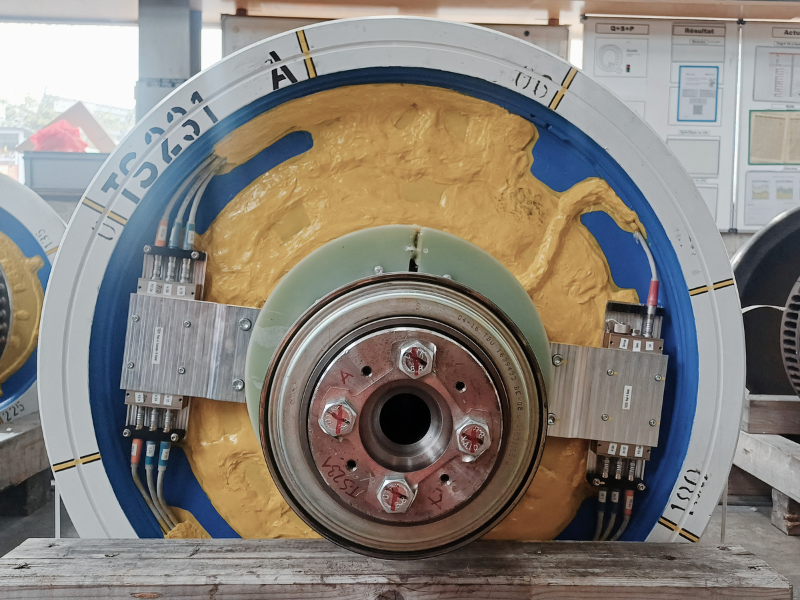
TÜV SÜD Rail uses the imc MTP-NT-XS telemetry solution for wheel-rail force measurements during on-track rail vehicle validation. The standardized housing concept was developed to simplify installation and module replacement while protecting telemetry electronics against demanding railway environments.
Proven wheelset & components test solutions |
What does a railway DAQ system need to do?
These companies trust us




What is railway testing?
Railway testing is the measurement, validation, and evaluation of rail vehicles, components, and infrastructure to ensure safety, reliability, performance, and compliance with relevant standards. Testing can take place during vehicle development, commissioning, maintenance, on-track operation, or on dedicated test stands. Typical measurements include mechanical loads, wheel-rail forces, vibration, noise, temperature, electrical quantities, and vehicle-bus data.
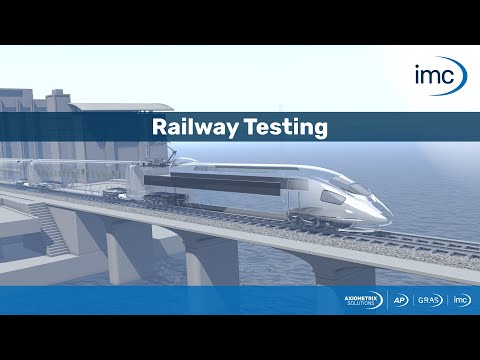
Rail vehicles and components face demanding operating conditions, including high mechanical loads, vibration, temperature changes, moisture, and electromagnetic interference. Railway testing helps engineers verify their safety and reliability under real-world conditions and identify potential problems before failures occur. Depending on the application, measurements include wheel and axle loads, wheel-rail forces, strain, acceleration, vibration, noise, temperature, voltage, current, braking performance, and vehicle-bus signals. Modern data acquisition (DAQ) systems capture many of these signals simultaneously while synchronizing measurements across distributed points throughout the vehicle.
Railway testing falls into two main categories: stationary testing on test stands and mobile testing under real operating conditions (on-track testing).
Stationary testing focuses on evaluating structures and individual components in controlled environments. Typical applications include structural testing, bogie testing, component testing, and maintenance measurements on test stands.
Mobile/on-track testing evaluates rail vehicles and components during actual train operation. Applications include instrumented wheelset testing, wheel-rail force measurement, brake testing, pantograph and high-voltage testing, and acoustic and NVH measurements. Sensors and distributed data acquisition systems installed throughout the vehicle synchronously capture mechanical, electrical, acoustic, and vehicle-bus signals, providing engineers with realistic data on operational loads and vehicle behavior.
Instrumented wheelsets can be equipped with sensors and telemetry systems that measure forces, strain, torque, or other mechanical loads while the vehicle is running. These measurements help engineers understand wheel-rail interaction and dynamic loads and support the validation of wheelsets under demanding operating conditions.
Pantograph and high-voltage testing evaluates the electrical and mechanical behavior of the current-collection system between the train and the overhead line. Because measurements may take place in high-voltage environments, the measurement system must provide suitable electrical isolation while reliably acquiring synchronized electrical, mechanical, and other measurement signals.
NVH stands for noise, vibration, and harshness. Railway NVH testing measures acoustic emissions and structural vibration to evaluate passenger comfort, vehicle dynamics, component behavior, and environmental noise. Measurements can be performed inside the vehicle or externally during train pass-by tests.
There are two important standards for railway acoustic testing: ISO 3095, which covers the measurement and evaluation of exterior noise emitted by rail vehicles, and ISO 3381, which addresses noise measurements inside rail vehicles.
Rail vehicles can require sensors at many locations over considerable distances. Modular DAQ systems for distributed measurement set ups allow measurement modules to be installed close to the sensors instead of routing long analog sensor cables through the entire vehicle. The systems can then be networked and synchronized, simplifying installation while enabling precise simultaneous measurements across the vehicle.
Railway testing presents a unique challenge: capturing precise, synchronized measurement data from a moving train under demanding operating conditions. From wheel-rail forces and bogie vibrations to pantograph performance and vehicle-bus signals, engineers must simultaneously monitor hundreds of measurement channels distributed across wheelsets, bogies, and multiple railcars. Real-time data processing helps detect critical conditions during testing and minimizes post-processing effort.
At the same time, railway data acquisition (DAQ) systems must withstand splash water, stone impact, extreme temperatures, vibration, and electromagnetic interference. Ruggedness, precise synchronization, scalability, and distributed measurement capabilities are essential. Depending on the application, additional requirements include high-voltage isolation for pantograph testing, telemetry for rotating wheelsets, and standards-based acoustic analysis for noise and vibration testing.
imc brings these capabilities together through modular DAQ systems, telemetry, sensors, and measurement software in one synchronized environment, supporting everything from individual component tests to full-train measurements.
imc provides data acquisition hardware, measurement software, telemetry systems, sensors, and test-stand solutions for both mobile and stationary railway applications. The systems support synchronized and distributed measurement, railway vehicle-bus acquisition, real-time analysis, and applications ranging from wheelset and pantograph testing to NVH measurements and structural testing.
Railway DAQ solutions proven in real applications |

Proven in real-world railway testing
“Telemetry systems used in on-track tests on railway vehicles depend on experience and close cooperation. The combination of our application expertise and imc’s manufacturer know-how creates a partnership that works — especially when fast support is needed.”
André Rohrbeck, Team Lead Instrumented Wheelset
Contact our rail expert
Find the right railway measurement solution
Tell us what you’d like to measure.
We’ll recommend the right imc measurement system for you—with no obligation and with technical advice from experts who understand web measurement technology.
✓ No obligation—technical advice with no strings attached
✓ Direct communication with an imc measurement technology specialist