


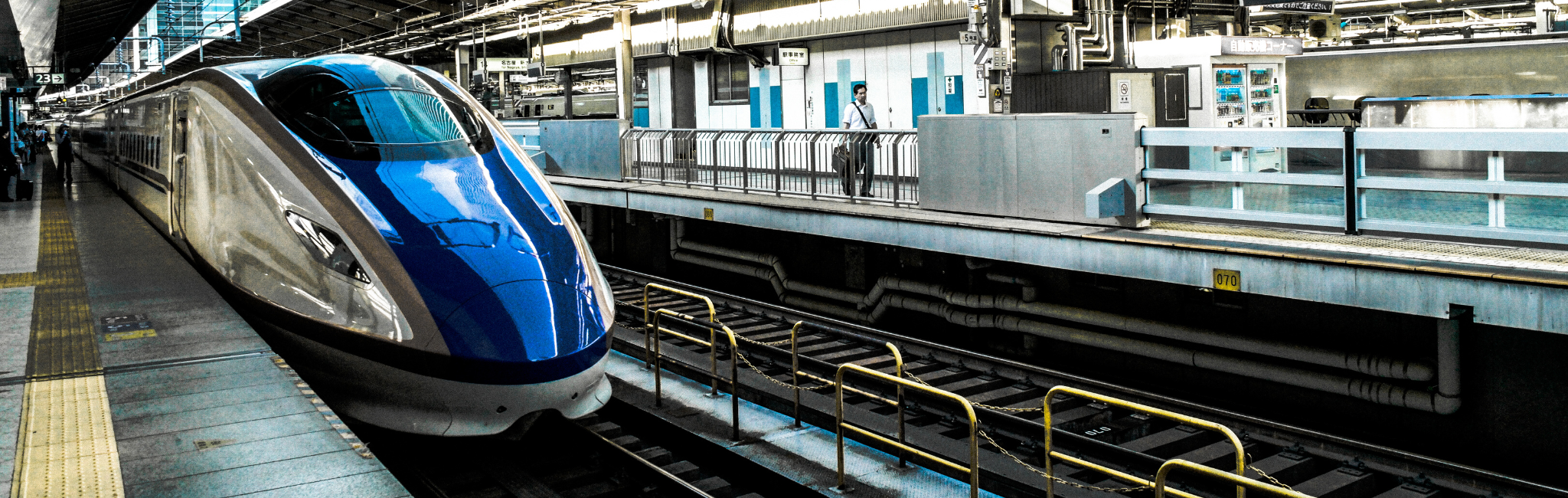
How Passenger Comfort Directs Bogey Improvement
Passenger Comfort Directs Bogey Improvements
How KAI, BRIN, and ITS use imc DAQ systems to evaluate rail performance and structural dynamics
Modernizing rail transport requires more than just new trains - it demands rigorous testing of structural integrity and passenger comfort under real operating conditions. As Indonesia's railway infrastructure evolves, a comprehensive field-testing campaign is being driven by a strategic collaboration. Spearheading this initiative are Kereta Api Indonesia (KAI), Institut Teknologi Sepuluh Nopember (ITS), and the National Research and Innovation Agency (BRIN), specifically driven by PRTT BRIN (Pusat Riset Teknologi Transportasi) and the Aerodynamics, Aeroelasticity, and Aeroacoustics Laboratory. Together, they are focusing on accurately measuring in-cabin noise, vibration, and GPS data directly during vehicle operation on the national railway network.
The Challenge: Mapping NVH Across a Complex Matrix of Track Conditions
When the joint testing team set out to evaluate the acoustic and vibratory performance of the trains, the goals were clear: validate passenger comfort, comply with international standards, and maintain absolute synchronization across mixed-signal types. The primary challenge lies in the sheer variety of operational and geographical states that the train encounters. The validation program requires continuous data recording across six critical conditions:
- Maximum Speed: Evaluating steady-state aerodynamic and track noise at peak velocity.
- Acceleration: Capturing power-train and traction noise variations.
- Deceleration: Analyzing braking system resonances and forces.
- Uphill Turns: Evaluating increased load demands combined with track curvature.
- Downhill Turns: Mapping structural handling and gravity-assisted speed adjustments.
- Sharp Turns: Measuring wheel-rail interface squeal and high lateral structural forces.
High-Precision Sensor Distribution and Architecture
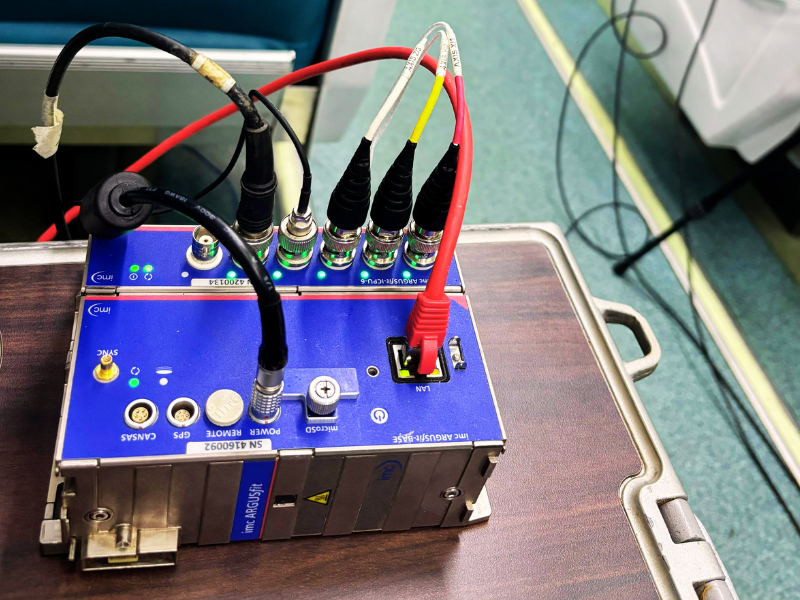
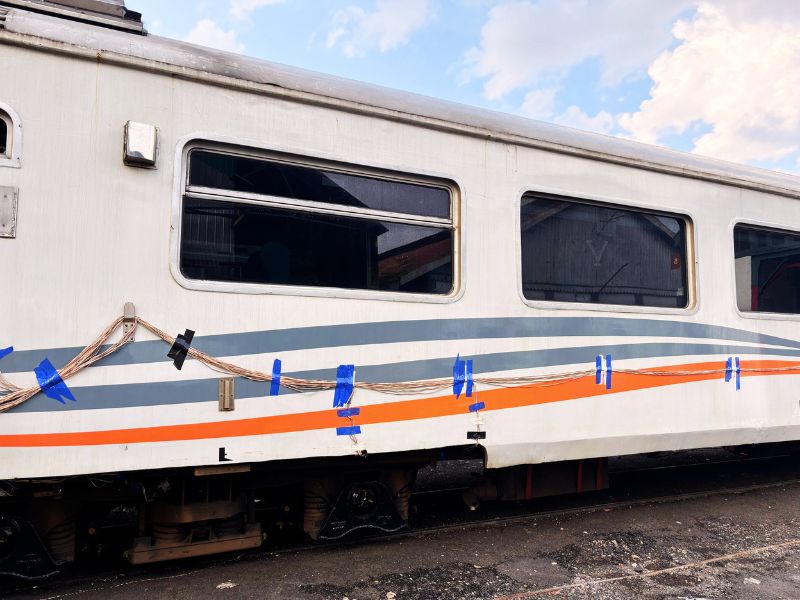
To capture these complex interactions, the engineering team deployed a strategic sensor matrix across the entire length of the passenger car. By utilizing the ultra-compact imc ARGUSfit data acquisition system, all high-frequency acoustic data, structural vibration channels, and low-frequency GPS tracking signals are locked to a single, precise master timestamp. The hardware architecture reliably integrates a diverse mix of sensor types tailored for precise spatial mapping:
Acoustic Profile Matrix
- Floor-Level Tracking: GRAS 40ph-10 microphones are positioned just 10 cm from the cabin floor to capture low-frequency structural acoustics and bogie transmission.
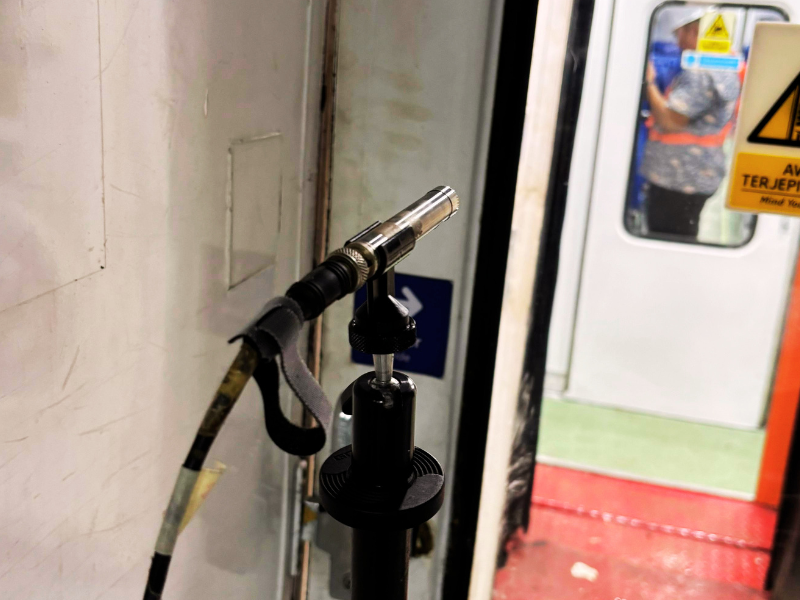
- Passenger Environment & HVAC: High-precision GRAS 46AE 1/2" free-field microphone sets are deployed to evaluate the acoustic space at strategic points. Microphones are positioned 20 cm below the train roof near the AC blower to isolate climate-control emissions, while others are set at an ergonomic passenger ear-level height of 1.2 meters from the floor (positioned 20 cm from the windows and entry doors) to capture realistic passenger exposure.
Multi-Axis Structural Vibrations (International Standards Compliant)
- Vibration profiles are logged at three key longitudinal junctions along the cabin baseline.
- A combination of one triaxial accelerometer and two single-axis accelerometers measure multi-axis accelerations (X, Y, and Z vectors) to evaluate whole-body vibration transmission from the tracks through the chassis.
- The entire vibration measurement setup and data pipeline are designed to adhere strictly to international standards, such as ISO 2631, ensuring accurate evaluation of human exposure to whole-body vibration and ride comfort.
Automated Data Post-Processing with FAMOS
Capturing data across hours of rail travel is only half the battle; the real value comes from efficient analysis. The team utilizes FAMOS to completely streamline their engineering workflows. Because the software seamlessly handles locational GPS coordinate integration, engineers can effortlessly align dynamic physical data directly with the physical railway tracks.
Using localized map speed gradient displays, FAMOS visualizes the data rapidly against the train's actual geographic position. This allows the team to isolate the exact moments the train enters a sharp turn or hits peak speed. Furthermore, the software enables automated, repetitive batch post-processing routines, running complex algorithms across all six track conditions with a single click.
Post-Processing Measurement Data
The evaluation of measurement data, regardless of its source, could have been executed with the data analysis software FAMOS. FAMOS offers useful tools that correspond to the demands of engineers and technicians, specially for comprehensive data sets like those acquired during road load data measurements, Visualization and analysis features and automatized measurement routines, ranging from data import to creating meaningful reports, help to generate and to communicate measurement results efficiently.
Conclusion
A representative from the joint testing team notes:
"By combining imc DAQ systems with GRAS microphones, we can precisely synchronize noise, vibration, and GPS data and correlate them with specific track conditions. FAMOS then enables efficient analysis of the measurement data."
Your Next Rail Measurement Project – Let’s Talk
Which system best fits your application? Our application engineers understand the specific demands of rail testing and support you from concept through commissioning. Book a meeting with our experts:
