


 Home
Solutions
Industries
Energy & Power Grid
Durability Testing of Wind Turbine Blades
Home
Solutions
Industries
Energy & Power Grid
Durability Testing of Wind Turbine Blades
Durability Testing of Wind Turbine Blades During Ocean Transport
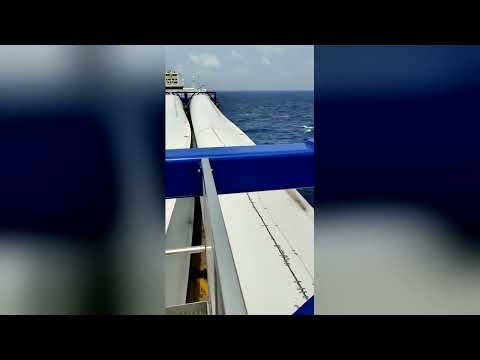
How can structural loads on large wind turbine blades be monitored reliably during a 40-day journey at sea? GE Wind Power used a multi-channel measurement setup with approximately 130 sensors and imc data acquisition systems to continuously monitor one 5-MW-class wind turbine blade during transport from China to England.
Despite wind, vibrations, dampness and demanding maritime conditions, the measurement system recorded data continuously throughout the entire voyage without a single issue.
Why monitor wind turbine blades during transportation?
Wind turbine blades are large, lightweight structures that can be exposed to significant mechanical loads before they are ever installed on a turbine.
During ocean transport, blades can experience:
- Continuous vibration
- Acceleration and movement of the vessel
- Wind loads
- Spray water and dampness
- Changing environmental conditions
- Mechanical loads at the mounting points
GE Wind Power therefore wanted to understand whether a transport voyage of around 40 days could potentially cause structural damage to the blades - and obtain measurement data that could help reduce such risks in future transports.
How was the wind turbine blade instrumented?
Six blades for 5-MW-class wind turbines were transported by ship from the manufacturing site in China to England for installation. One of the blades was equipped with approximately 130 measurement sensors.
The measurement setup included primarily:
- Strain gauges distributed across the blade surface to measure structural strain
- Accelerometers installed on the mounting brackets to monitor vibration and acceleration
This created a decentralized, multi-channel measurement task across a very large test object. Unlike a controlled laboratory test, the measurement had to operate autonomously during an approximately 40-day ocean voyage.
The DAQ system needed to provide:
- Reliable acquisition of approximately 130 sensor channels
- Support for multi-channel strain gauge measurements
- Continuous long-term data recording
- Autonomous operation far from a laboratory
- Robust performance under vibration and changing environmental conditions
- Reliable measurement throughout the complete transport
Once the ship departed, measurement reliability was critical. A system failure could have resulted in the loss of valuable measurement data from part of the voyage. This is why the measurement campaign was supervised by imc Test & Measurement partner ATS from India.
How did the imc DAQ system perform during the 40-day voyage?
All sensors were acquired using imc data acquisition systems, which recorded the measurement data continuously throughout the entire journey without a single issue.
This application illustrates a fundamental requirement of mobile and structural testing: measurement technology must remain reliable wherever the test takes place.
Large structures and mobile tests often require many sensors to be distributed across the test object while operating under conditions that cannot be reproduced easily in a laboratory. imc provides DAQ solutions for the complete measurement workflow - from sensor connection and multi-channel data acquisition to data processing and analysis.
Whether testing takes place in the laboratory, on a test rig, on a vehicle, on a wind turbine or at sea, the objective remains the same: reliably turn physical loads into usable engineering data.
One measurement ecosystem. Different environments. Reliable data wherever testing takes place.
What did GE Wind Power gain from the measurements?
This measurement campaign provided GE Wind Power with a continuous dataset showing the mechanical loads experienced by the instrumented blade during the transport.The measurement data helped engineers better understand the actual mechanical stresses acting on a wind turbine blade during ocean transportation.
The application provided data for:
- Evaluating structural loads during transport
- Identifying potentially critical load events
- Understanding vibration and acceleration during the voyage
- Assessing the risk of transport-related structural damage
- Supporting improvements to future transport and securing concepts Instead of relying solely on assumptions about transport loads, engineers could evaluate the conditions based on measured data.
Explore wind energy DAQ solutions
See related applications and find the right measurement solution for your project
Brake and Gearbox Testing
Verification measurements of offshore wind turbines include measuring braking forces acting on the gearbox, temperature and hydraulic pressures as well as the gondola position as well as the wind speed and direction to ensure reliable operation of the wind turbine.
Explore Use Case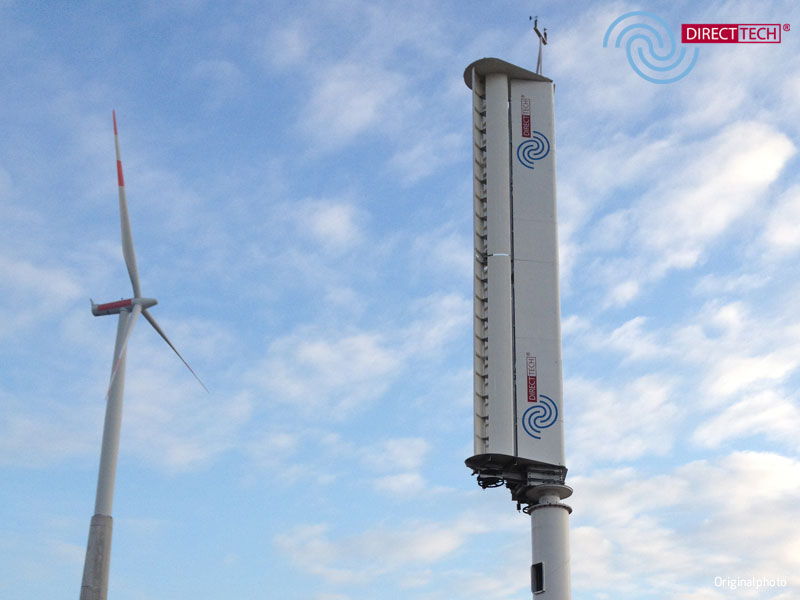
IEC-614000 Prototype Certification
Small-scale vertical wind turbines are an alternative where space is limited. During the certification of a new vertical wind turbine by Directtech, the relevant measurement data according to IEC-614000 was acquired with an imc DAQ solution.
Explore Use CasePlanning a Wind Energy Measurement Project?
Tell us what you need to measure. Our application engineers can help you define the measurement architecture, sensors, DAQ hardware and analysis workflow.