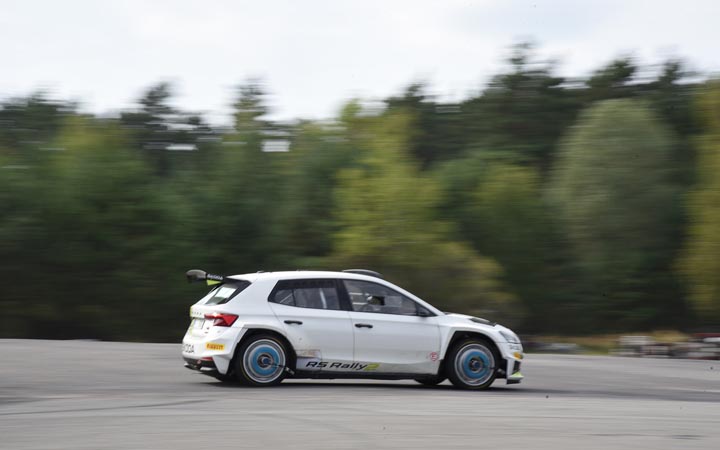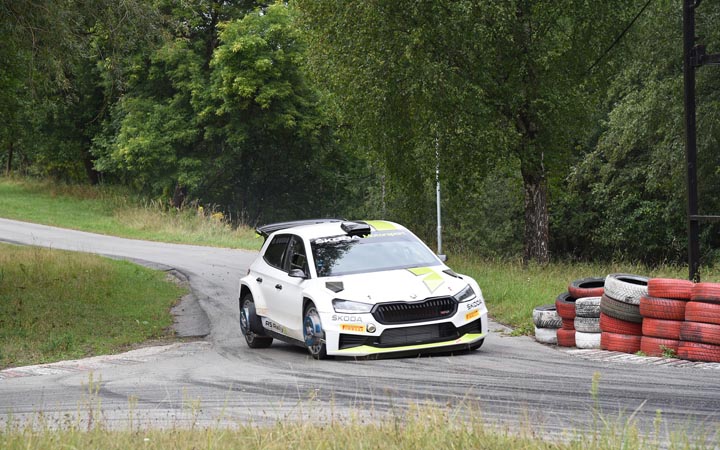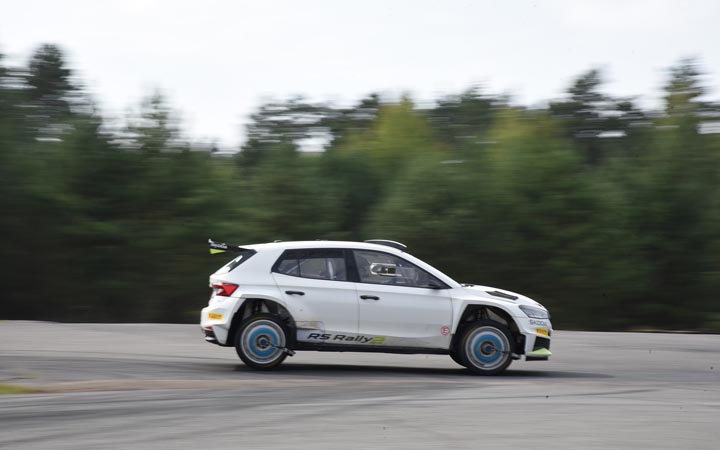
Vehicle Dynamics
Vehicle dynamics is a fundamental aspect of automotive engineering that focuses on understanding and improving the way vehicles behave and perform. It refers to the study of how vehicles move, including the forces and interactions that influence their motion. Automotive dynamics covers a breadth of topics focused on analysing the mechanics of vehicle movement, including factors like acceleration, braking, handling, ride comfort, and stability. It involves understanding and predicting the responses of a vehicle to various inputs like steering, road irregularities, and aerodynamic forces. Vehicle dynamics is crucial in the design and optimization of vehicles for safety, efficiency, and performance and to ensure a vehicle's stability, maneuverability, and comfort.
To achieve these objectives, engineers and researchers rely on vehicle dynamics testing. This process involves assessing a vehicle's response under various conditions, such as different speeds, road surfaces, and weather conditions. Tests are conducted using both real-world driving scenarios and controlled environments, like test tracks and simulation models. These tests provide valuable data helping engineers to understand how a vehicle reacts to different forces and inputs, such as steering, braking, and acceleration.
Two crucial sensor systems for evaluating the driving dynamics of a vehicle are the Steering Effort Sensor and the Wheel Force and Torque Transducer. The steering torque sensor is used to measure which inputs are entered into the vehicle system (black box vehicle) and the wheel force and torque transducers can then be used to determine the effect of the inputs on the vehicle. The interaction between tire and road are of particular interest. In addition, there are other sensor systems required for these measurements which include GPS systems, acceleration sensors, inertial platforms and pedal force sensors.
Wheel Force and Torque Transducer WFT-Cx
These devices are mounted on the vehicle's wheels and measure the forces and torques acting in three dimensions. They provide detailed data on how the tires interact with the road surface, which is vital for understanding traction, handling, and braking performance.
> to the Wheel Force and Torque Transducer WFT-Cx
By continuously advancing these fields, the automotive industry strives to create vehicles that are not only more efficient and safer but also more enjoyable to drive.