• A leader in the test & measurement space
  • Audio Analyzers & Testing by Audio Precision
  • GRAS Sound and Vibration
  • imc Test & Measurement GmbH - productive testing
imc Test & Measurement GmbH
GRAS
  • Products
    Data Acquisition Systems
    • ARGUSfit - miniature
    • CRONOSflex - clickable
    • CRONOScompact - rack-based
    • CRONOS-XT - rugged & modular
    • CRONOS-SL - rugged
    • C-SERIES - small & versatile
    • SPARTAN - low-speed
    • EOS - high-speed
    • BUSDAQflex - vehicle-bus logger
    • CANSAS - CAN-based
    • Legacy Products
    Measurement Software
    • FAMOS - test data analysis
    • imc STUDIO - measurement & control operation
    • imc Online FAMOS - real-time analysis
    • imc WAVE - live NVH analysis
    • imc LINK - remote data transfer
    • imc SENSORS - sensor database
    • Legacy Products
    Sensor Solutions
    • WFT - 6-component Wheel Force Transducer
    • WTT - Wheel Torque Transducer
    • CLSx - Steering Effort Sensor
    Telemetry
    • Dx – modular telemetry system
    • MTP-NT - inductive transmission
    • CTP-NT-Rotate – compact radio telemetry
    • T1 – 16 bit single channel telemetry
    • TEL 1 –12 bit single channel telemetry
    • TEL1-Flex – bendable single channel telemetry
    Test Stands
    • Component Test Stands
    • Endurance Test Stands
    • Retrofit
    • Realized test stands
  • SOFTWARE
    • FAMOS
    • imc STUDIO
    • imc Online FAMOS - real-time analysis
    • imc WAVE - live NVH analysis
    • imc LINK - remote data transfer
    • Legacy Products
  • Solutions
    Industries
    • Automotive
    • Rail
    • Aerospace
    • Energy & Power Grid
    • Mechanical Engineering
    • Civil Engineering
    Applications
    • E-Mobility Applications
    • Test Stands
    • Noise & Vibration Analysis
    • Measurement Data Analysis
    • Durability testing
    • Strain Gauge Measurements
    • imc measurement devices in the "Internet of Things"
    • Condition Monitoring
    • Fieldbus Integration
  • Resources
    imc Academy
    • About imc ACADEMY
    • Training Calendar
    • Training Programs
    • Seminars
    • Workshops
    • Digital Courses
    • Coaching & Consulting
    Tradeshows & Events
    • Noise-Con 2026
    • AES Automotive Audio 2026
    • Automotive Testing Expo Shanghai 2026
    • Innotrans 2026
    • ATE North America 2026
    Webinars
    Product Downloads
    • Data Acquisition Systems
    • Measurement Software
    • Sensor Solutions
    • Telemetry
    • VIEW THE KNOWLEDGE CENTER
    Whitepapers
    • Mitigating damage from vibrational resonance
    • Spectrum analysis for sound power measurement
    • Mechanical power measurements on drive systems
    • From the sensor to data to added value
    • Integrated Component Test Stands
    • Ground vibration testing
    App Notes
    • Czinger 21C Safety & Durability Testing
    • Prevention of torsional vibration on wheelsets
    • imc Application Note: Liebherr BEV Mining Truck
    • Dynamic load testing of rail wheelsets
    • SBB monitors Swiss railways with imc
    • Testing Safely in High-voltage Environments
    News
    • News: E-motor test stands
    • VIEW THE KNOWLEDGE CENTER
    Press
    • Press Releases
    • VIEW THE KNOWLEDGE CENTER
  • Support
    Customer Service
    • Device Rental/Personnel Contracting
    • CE conformity
    System Service
    • Sending in a device for maintenance
    • Express Service
    About
    • Company Profile
    • CAEMAX
    • KMT
    • Jobs
    • Locations
    • General Terms & Conditions
    • Export declaration
    • Quality Assurance
    • imc Worldwide
    • Becoming a partner
    • Partner Portal
  • Contact Us
    • Contact Sales
    • General Contact
    • Become a Partner
    • Locations
    • +44 7985564945
  • English
  • Deutsch (de)
  • Chinese (Simplified)
  • South Korean
  • French
  • Hungarian
  • Chinese (Traditional)
  • Finnish
  • Spanish

Axiometrix Solutions Family

  • Axiometrix Solutions
  • Audio Precision
  • GRAS Sound & Vibration
  • imc Test & Measurement
  • English
  • Deutsch (de)
  • Chinese (Simplified)
  • South Korean
  • French
  • Hungarian
  • Chinese (Traditional)
  • Finnish
  • Spanish
LOG IN | SIGN UP
Wide-range Current Measurement

Wide-range Current Measurement

  1. Home
  2. Solutions
  3. Industries
  4. Wide-range Current Measurement

Analyzing Energy Flows and Power Consumption within the Vehicle's Electrical System

Modern hybrid and electric vehicles use complex power management in order to precisely control and optimize energy flows. Most people think about the electric drive train, however, the infotainment systems, actuators and ECU control units must also be supplied – even when the vehicle is stationary. It is therefore important – especially for optimizing vehicle range – to carry out comprehensive assessments of energy flows and power consumption within the vehicle electrical system. Extreme dynamics between idle and operating currents require very wide measuring ranges in order to analyse power under all operating scenarios.


Contact us regarding your project

How to Manage the Increased Numbers of Electrical Consumers in Vehicles?

The energy consumption of different ECUs in a vehicle is associated with an increased need for electrical energy (peak power) in various driving situations. In general, the electrical power consumption in vehicles has more than doubled. This was caused by the gradual decoupling of more and more vehicle systems that were traditionally consumers of the internal combustion engine, for example the steering system or coolant compressors. These have been directly replaced by electrical systems in electric vehicles. In addition, numerous new or greatly enhanced electrical consumers such as complex infotainment systems are installed in vehicles to increase comfort and safety.


Challenges for the Management of the Electrical System

To make things even more difficult, the on-board electrical system structure has moved to a two-battery architecture in electrical vehicles. This architecture has two voltage levels, which are coupled via a DC/DC converter, and must also incorporate a feed of high recuperation energies when braking. Therefore, complex energy management systems are necessary to manage these requirements and to ensure the safety and full functionality of a vehicle even in the case of a prolonged passive parking period. Stable behaviour of the on-board electrical system must be maintained through a variety of disturbance variables such as driving cycles, load scenarios or external temperatures.


Testing the Vehicle Prototype

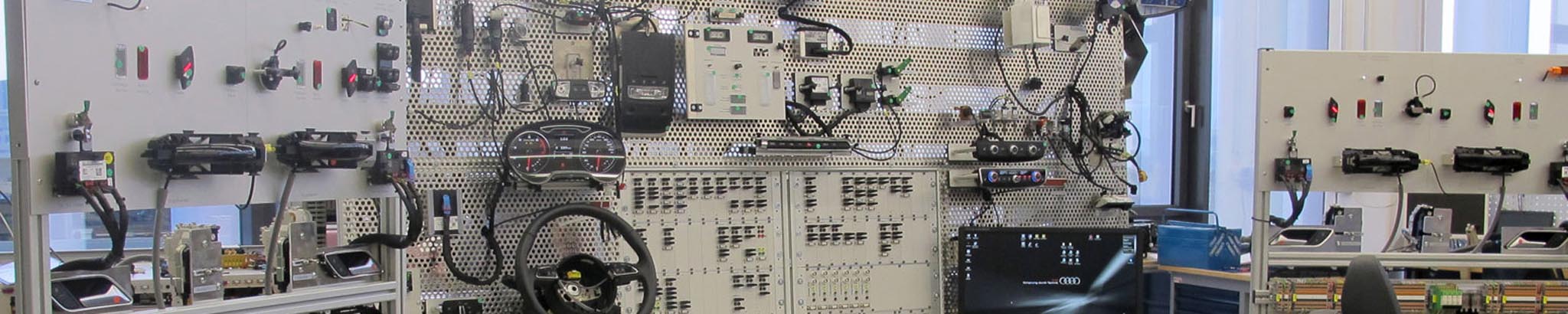
For this reason, the energy management system of a vehicle is already simulated in the prototype phase of the vehicle development and the accuracy of the simulation models is verified in later development phases by means of measurements. For these measurements, all electrical consumers of a vehicle type are assembled on so-called "breadboards", which remain in existence and available throughout the entire development and production time.

This allows, for example, errors in components and software updates to be reproduced. Up to 100 current channels must be monitored in these test stands to fully assess the energy management system and capture the resulting data.

Measuring load currents in vehicle electrical systems, especially when dealing with a wide range of current levels, presents several challenges. These challenges arise from the need to accurately and safely measure both very large and very small currents simultaneously. Here are some of the key challenges:

  1. Wide Current Range: Vehicle electrical systems typically have a wide range of current levels, from very small currents, nanoamps, in electronic control units (ECUs) to very large currents, tens of amps, in power-hungry components like motors and headlights. Measuring this wide range with a single device can be challenging.
  2. Accuracy and Precision: Maintaining high accuracy and precision across the entire current range is essential. Inaccurate measurements can lead to improper diagnosis and maintenance, affecting vehicle performance and safety.
  3. Shunt Resistance: To measure current, shunt resistors are often used. However, selecting an appropriate shunt resistor that can handle high current without overheating while still providing good resolution for small currents is a challenge.
  4. Voltage Drop: Large current measurements across shunt resistors can result in significant voltage drops. This can impact the performance of sensitive electronics or devices with low supply voltage thresholds. Mitigating this voltage drop is crucial.
  5. Heat Dissipation: Large currents produce heat, which can affect the accuracy of measurements and potentially damage components. Effective heat dissipation solutions must be employed to avoid these issues.
  6. Electrical Noise: The presence of both high and low current signals in the same system can introduce electrical noise. This noise can affect the accuracy of measurements and may require the use of additional shielding or filtering.
  7. Safety: Safety is a paramount concern when dealing with high currents. Adequate protection mechanisms, such as fuses or circuit breakers, must be in place to protect against overcurrent conditions. Ensuring safety while making accurate measurements is a balancing act but must always fall on the side of safety for the person taking the measurements.
  8. Sensor Calibration: Calibrating a current sensor to be accurate over a wide range can be challenging. Calibrating for small currents may require different techniques and equipment than for large currents.
  9. Cost: Developing a sensor or measurement system that can handle a wide current range while maintaining accuracy can be costly, which is a concern for both manufacturers and consumers.
  10. Size and Packaging: Creating a measurement device that can fit into the often limited space within a vehicle's electrical system can be challenging, especially when dealing with both very small and very large currents.

To address these challenges, automotive engineers and manufacturers may employ various strategies, such as using multiple sensors for different current ranges, using auto-ranging instruments, employing advanced calibration techniques, and integrating temperature and voltage compensation mechanisms. Ultimately, it's crucial to strike a balance between accuracy, safety, and cost when designing measurement systems for vehicle electrical loads.

What about dynamically switching the shunt, like an "auto-ranging" scheme?

What about dynamically switching the shunt, like an "auto-ranging" scheme? Is that feasible? Wouldn't that be smart?

Dynamically switching the shunt, similar to an "auto-ranging" scheme, is indeed a feasible and smart approach to address the challenge of measuring load currents over a wide range. This concept is commonly used in precision measurement instruments and can be applied to automotive electrical systems as well. Here's how it works:

  1. Auto-Ranging Principle: The measurement instrument continuously monitors the current and, when it detects a significant change in magnitude, it automatically switches to a shunt resistor or range better suited for that level of current. This ensures accurate measurements across the entire current range without the need for manual adjustments.
  2. User-Friendly: Auto-ranging systems are user-friendly because they eliminate the need for the operator to manually select different current measurement ranges. This simplifies the measurement process and reduces the risk of errors.
  3. Efficiency: Auto-ranging can improve the efficiency of current measurements, as it minimizes the energy dissipated as heat in the shunt resistor and reduces the impact on the vehicle's electrical system.

Auto-ranging is a valuable technique for addressing the challenge of measuring a wide range of currents in dynamic vehicle electrical systems.


Data Acquisition Systems Measurement Software Sensor Solutions Telemetry Test Stands
FAMOS imc STUDIO imc WAVE imc LINK
FAMOS FAMOS 2026 + AI FAMOS Resources Prices & Editions Try FAMOS
Industries General Applications Automotive Applications
Knowledge Center imc Academy App Notes Whitepapers Tradeshows & Events Webinars Measurement Software News Press Export Declaration
Customer Service System Service Contact Sales General Contact Become a Partner Locations
About imc About Axiometrix Solutions Company Profile CAEMAX KMT Careers Quality Assurance Terms & Conditions Facts
Axiometrix Solutions Logo negativ
imc Test & Measurement is part of Axiometrix Solutions, a leading test solutions provider comprised of globally recognized measurement brands. Productive testing is essential for the success of our customers—hence, our driving force. Since 1988 we have been committed to support industrial innovations with optimal measurement solutions. We are manufacturing our productive test and measurement systems at our headquarters in Berlin, Germany, operating worldwide in Europe, the US and Asia.

© imc Test & Measurement GmbH. All rights reserved.

Legal Notice Privacy Policy REPORT AN INCIDENT
Follow Us:
↑
Loading