• A leader in the test & measurement space
  • Audio Analyzers & Testing by Audio Precision
  • GRAS Sound and Vibration
  • imc Test & Measurement GmbH - productive testing
imc Test & Measurement GmbH
GRAS
  • Products
    Data Acquisition Systems
    • ARGUSfit - miniature
    • CRONOSflex - clickable
    • CRONOScompact - rack-based
    • CRONOS-XT - rugged & modular
    • CRONOS-SL - rugged
    • C-SERIES - small & versatile
    • SPARTAN - low-speed
    • EOS - high-speed
    • BUSDAQflex - vehicle-bus logger
    • CANSAS - CAN-based
    • Legacy Products
    Measurement Software
    • FAMOS - test data analysis
    • imc STUDIO - measurement & control operation
    • imc Online FAMOS - real-time analysis
    • imc WAVE - live NVH analysis
    • imc LINK - remote data transfer
    • imc SENSORS - sensor database
    • Legacy Products
    Sensor Solutions
    • WFT - 6-component Wheel Force Transducer
    • WTT - Wheel Torque Transducer
    • CLSx - Steering Effort Sensor
    Telemetry
    • Dx – modular telemetry system
    • MTP-NT - inductive transmission
    • CTP-NT-Rotate – compact radio telemetry
    • T1 – 16 bit single channel telemetry
    • TEL 1 –12 bit single channel telemetry
    • TEL1-Flex – bendable single channel telemetry
    Test Stands
    • Component Test Stands
    • Endurance Test Stands
    • Retrofit
    • Realized test stands
  • SOFTWARE
    • FAMOS
    • imc STUDIO
    • Online FAMOS
    • imc WAVE
    • imc LINK
  • Solutions
    Industries
    • Automotive
    • Rail
    • Aerospace
    • Energy & Power Grid
    • Mechanical Engineering
    • Civil Engineering
    E-Mobility
    • Temperature measurement in HV environments
    • Current measurement in HV environments
    • Voltage measurement in HV environments
    • Determine efficiency / power analysis
    • Testing electric motors
    • Testing driving dynamics
    • Practical examples
    • Battery test stand
    • Wireless Measurements of Rotor Temperature in E-drives
    • Back-to-Back Test Stand for Data Acquisition on Electric Motors
    Test Stands
    Noise & Vibration Analysis
    General Solutions
    • E-Mobility Applications
    • Measurement Data Analysis
    • Durability testing
    • Strain Gauge Measurements
    • imc measurement devices in the "Internet of Things"
    • Condition Monitoring
    • Fieldbus Integration
  • Resources
    imc Academy
    • About imc ACADEMY
    • Training Calendar
    • Training Programs
    • Seminars
    • Workshops
    • Digital Courses
    • Coaching & Consulting
    Tradeshows & Events
    • Sensor+Test 2026
    • Automotive Testing Expo Stuttgart 2026
    • Noise-Con 2026
    • AES Automotive Audio 2026
    • Automotive Testing Expo Shanghai 2026
    • Innotrans 2026
    • ATE North America 2026
    Webinars
    • Advancing Rail Safety: TÜV Süd & imc on Reliable M
    Product Downloads
    • Data Acquisition Systems
    • Measurement Software
    • Sensor Solutions
    • Telemetry
    • VIEW THE KNOWLEDGE CENTER
    Whitepapers
    • Mitigating damage from vibrational resonance
    • Spectrum analysis for sound power measurement
    • Mechanical power measurements on drive systems
    • From the sensor to data to added value
    • Integrated Component Test Stands
    • Ground vibration testing
    App Notes
    • Czinger 21C Safety & Durability Testing
    • Prevention of torsional vibration on wheelsets
    • imc Application Note: Liebherr BEV Mining Truck
    • Dynamic load testing of rail wheelsets
    • SBB monitors Swiss railways with imc
    • Testing Safely in High-voltage Environments
    News
    • News: E-motor test stands
    • VIEW THE KNOWLEDGE CENTER
    Press
    • Press Releases
    • VIEW THE KNOWLEDGE CENTER
  • Support
    Customer Service
    • Device Rental/Personnel Contracting
    • CE conformity
    System Service
    • Sending in a device for maintenance
    • Express Service
    About
    • Company Profile
    • CAEMAX
    • KMT
    • Jobs
    • Locations
    • General Terms & Conditions
    • Export declaration
    • Quality Assurance
    • imc Worldwide
    • Becoming a partner
    • Partner Portal
  • Contact Us
    • Contact Sales
    • General Contact
    • Become a Partner
    • Locations
    • +44 7985564945
  • English
  • Deutsch (de)
  • Chinese (Simplified)
  • South Korean
  • French
  • Hungarian
  • Chinese (Traditional) - Taiwan
  • Finnish
  • Spanish

Axiometrix Solutions Family

  • Axiometrix Solutions
  • Audio Precision
  • GRAS Sound & Vibration
  • imc Test & Measurement
  • English
  • Deutsch (de)
  • Chinese (Simplified)
  • South Korean
  • French
  • Hungarian
  • Chinese (Traditional) - Taiwan
  • Finnish
  • Spanish
LOG IN | SIGN UP
  • Vibration analysis with imc WAVE vibration


  1. Home
  2. SOFTWARE
  3. imc WAVE

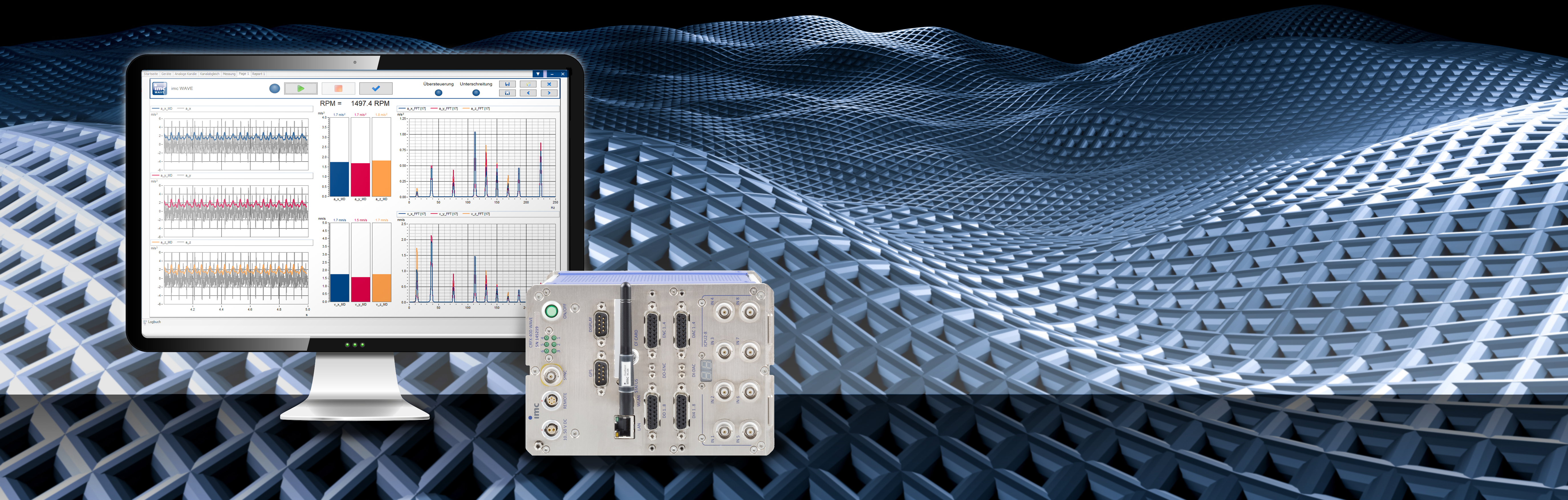
The acquisition and analysis of machine vibrations and vibrations on the human body can be performed in compliance with standards using imc WAVE vibration. imc WAVE offers professional tools for vibration level and band-limited vibration level analysis, as well as for frequency analysis as FFT, third-octave and octave spectra. In addition to methods for machine diagnosis, the user also has access to methods for the analysis and evaluation of vibrations on the human body.


Download demo version

Get price details

Online results

  • Filters (LP, HP, BP, BS)
  • Machine diagnostics according to ISO 10816/20816
  • Human Vibration Filter, Fast, Slow, Impulse, Peak, Keq
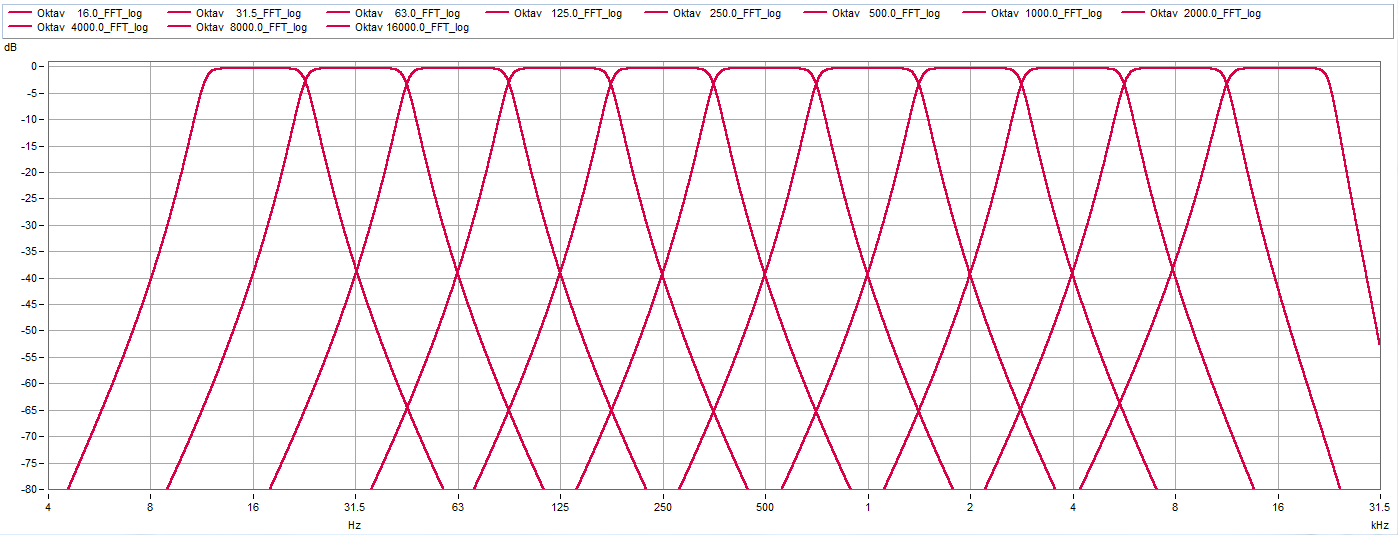
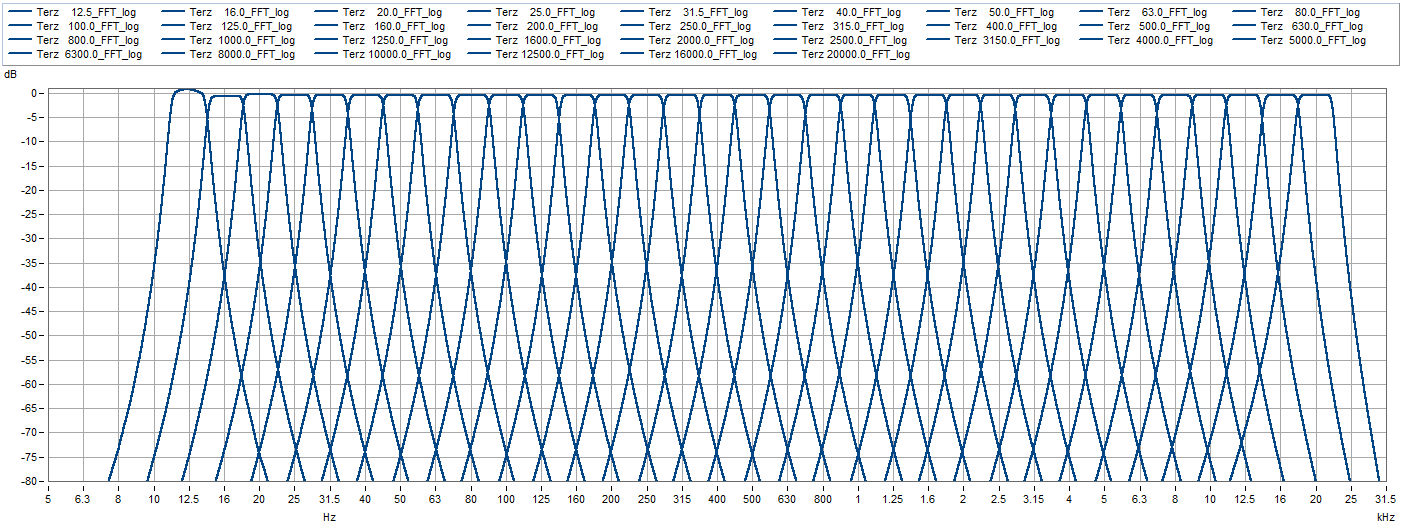
  • Vibration 1/1-tel and 1/3-tel octave analysis according to IEC 61260
  • FFT analysis (up to 131072 points)

Offline results optional

  • 1/12 octave and 1/24 octave band spectrum

Typical applications

  • Machinery diagnosis
  • Acceptance and certification measurements with the effect of vibrations on machines
  • Product qualifications
  • Product optimizations in the development area
  • Holistic investigations of causes, propagation paths and effects of vibrations
  • Standardized human vibration measurements
  • Acceptance and certification measurements with the effect of vibrations on humans
  • Seat comfort in vehicles: measurements for qualification and optimization
  • Hand-arm vibrations: Hand-guided machines

Frequently Asked Questions

  • How do vibrations occur on machines?
  • How can I measure vibrations?
  • How do I perform vibration analysis on machines?
  • What is frequency analysis?
  • What is enveloping curve analysis?
  • What are human vibrations?
  • How are human vibrations recorded?
  • Which frequencies and amplitudes in the human vibration analysis are particularly harmful?
How do vibrations occur on machines?

Vibrations originate in in- and out-movements of machines and rotating machines and machine components, for example of pistons, compressors, rotors, shafts and rollers, as well as gearboxes and pumps. The amplitude and the frequencies depend on the natural frequencies and stiffness. Additional shocks that are caused by damage to individual components are additionally provoking vibrations on machines. Based on their amplitudes and frequencies, machine and component faults can be detected and localized, for example: unbalance, rolling bearing damage or misalignment.


How can I measure vibrations?

In vibration analysis, we record and analyze the vibrations with accelerometers, vibration velocity sensors or vibration displacement sensors.


How can I measure vibrations?

There are various analysis options for recording and documenting vibrations on machines. These are in particular the vibration level and the band-limited oscillation level. Frequency analysis and envelope analysis methods are used to diagnose vibrations. International standards include ISO 10816, ISO 20816, VDI 3832.


What is frequency analysis?

A frequency analysis can be calculated narrow-band as FFT analysis or clearly laid out as as a third-octave and octave analysis. In frequency analysis, a basic distinction is made between two methods: third-octave and octave analysis or FFT analysis.


What is a one-third octave-analysis?

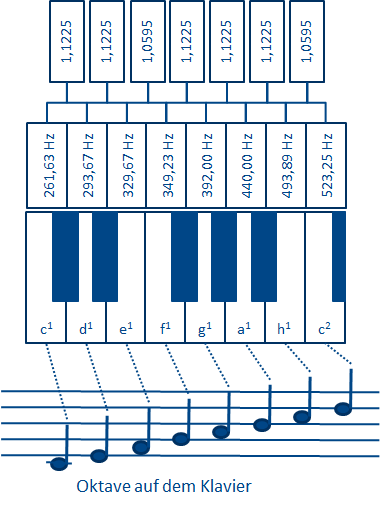
To get detailed information about a complex sound signal, more information has to be identified about the composition of the signal's frequency. The different frequencies can be best explained with a musical scale.


The octave [lat.], describes the interval of 8 diatonic steps away from the first note. In acoustics it denotes the tonal sound that has twice the frequency, related to a first sound. Since antiquity, the representation of the western tonal system has been based on the octave. The third octave analysis (third [lat.], the third tone) is a frequency analysis with relatively constant frequency resolution, i.e. that the center frequency fm of a bandpass filter in relation to the bandwidth (fB=fO-fU) is the same for all frequency bands. The upper cutoff frequency fO and the lower cutoff frequency fU of a bandpass filter are at an amplitude attenuation of -3 dB (factor 0.707). The relative bandwidth of the octave is fB = 0.707, the third octave is fB = 0.23 and the 1/12th octave is fB = 0.059.


The one-third octave spectrum allows an evaluation of the spectral line distribution, for example of a sound signal. Its advantage is the ability to rate the logarithmic frequency of the human ear. The one-third octave filters roughly correspond in their bandwidths to the frequency groups that reach the discriminating ability of the ear. Because of this, their discriminating power is sufficient for many psychoacoustic problems, including loudness determination.

A frequency analysis can be calculated narrowband as FFT analysis or clearly represented as third octave and octave analysis.

What is a FFT (fast fourier transform) analysis?

The Fast Fourier Transform (FFT) is a fast computational algorithm for calculating the discrete Fourier transform (DFT). The algorithm developed by James Cooley and John W. Tukey (1965) uses computational advantages that arise with a number of 2 to the power of N values.

    In modern analysis software packages, one is no longer dependent on the number of values of 2 to the N, because if the number of FFT points is not a power of 2, the signal is interpolated to the corresponding higher sampling frequency.

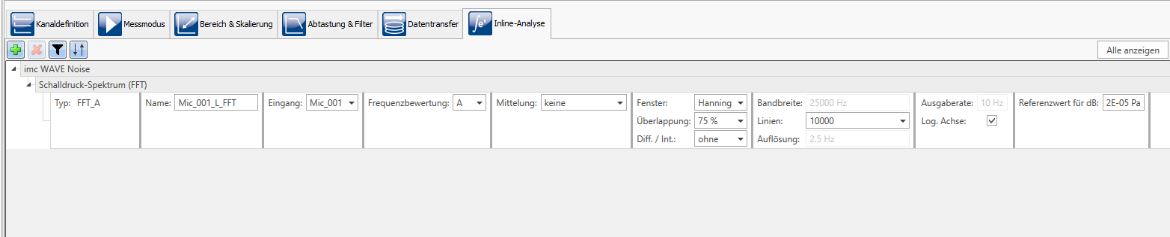
    In this way, various parameters can be set with imc WAVE.

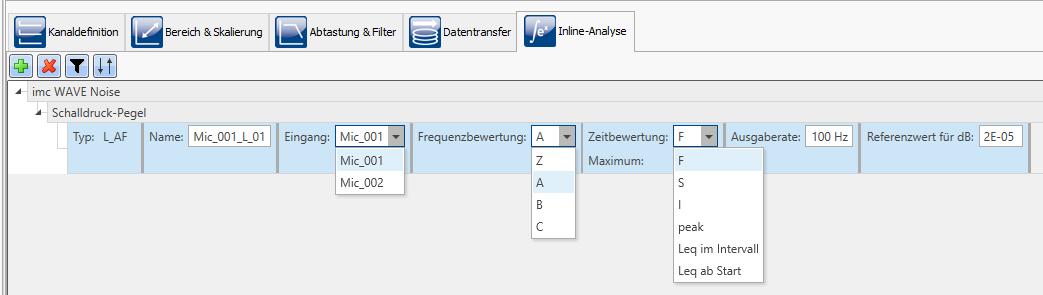
    • Frequency weighting: A, B, C or Z
    • Averaging: none, Leq from start
    • Windows: Rectangle, Hamming, Hanning, Blackman Blackman-Harris and Flat-Top
    • Overlap: 0%, 10%, 25%, 33.33%, 50%, 66.66%, 75%, 90%
    • Diff./Int.: differentiate, dual differentiate, integrate, dual integrate.
    • Points: 128.....131072
    • Log.axis: Yes / No
    • Reference value dB 20 µPa = 2 E-05 Pa
    • Display of: Bandwidth, resolution and output rate

    What is enveloping curve analysis?

    Enveloping curve analysis is a method to separate (demodulate) amplitude modulated signals into carrier and damage frequencies. Therefore, it is used for the detection of damage, especially in rolling bearings. Here, each bearing has an individual fingerprint. With the help of an FFT analysis and the knowledge of the mechanic structure of the bearing, the damaging frequencies can be separated according to inner ring, outer ring and rolling element.

    What are human vibrations?

    Human vibrations are mechanical vibrations that are transmitted to the human body. Typical machines for this are power saws, angle grinders, hammer drills, pneumatic hammers and demolition hammers. The impact of these vibrations on bones and joints leads to circulatory disorders and nerve damage, and in the long term can lead to occupational diseases such as white finger disease. A distinction is made between 2 main groups: Whole-body vibrations and hand-arm vibrations in the X, Y and Z directions.


    How are human vibrations recorded?

    Mostly with a triax vibration sensor or a seat vibration sensor representing vibration acceleration or vibration velocity.

    Which frequencies and amplitudes in the analysis of human vibrations are particularly harmful?

    If we consider the human being as a mechanical model, subdividing it into spring-mass systems, each body-part has a a different natural frequency for, which can be damaged by continuous loading. The vibration load depends mainly on the frequency, the amplitude and the applied pressure force as well as the duration of the impact. International standards include EN 1032, ISO 2631-x, ISO 28927, ISO 5349, ISO 8041 and VDI 2057.


    Data Acquisition Systems Measurement Software Sensor Solutions Telemetry Test Stands
    FAMOS imc STUDIO imc WAVE imc LINK
    FAMOS FAMOS 2026 + AI FAMOS Resources Prices & Editions Try FAMOS
    Industries General Applications Automotive Applications
    Knowledge Center imc Academy App Notes Whitepapers Tradeshows & Events Webinars Measurement Software News Press Export Declaration
    Customer Service System Service Contact Sales General Contact Become a Partner Locations
    About imc About Axiometrix Solutions Company Profile CAEMAX KMT Careers Quality Assurance Terms & Conditions Grounding Page
    Axiometrix Solutions Logo negativ
    imc Test & Measurement is part of Axiometrix Solutions, a leading test solutions provider comprised of globally recognized measurement brands. Productive testing is essential for the success of our customers—hence, our driving force. Since 1988 we have been committed to support industrial innovations with optimal measurement solutions. We are manufacturing our productive test and measurement systems at our headquarters in Berlin, Germany, operating worldwide in Europe, the US and Asia.

    © imc Test & Measurement GmbH. All rights reserved.

    Legal Notice Privacy Policy REPORT AN INCIDENT
    Follow Us:
    ↑
    Loading