• A leader in the test & measurement space
  • Audio Analyzers & Testing by Audio Precision
  • GRAS Sound and Vibration
  • imc Test & Measurement GmbH - productive testing
imc Test & Measurement GmbH
GRAS
  • Products
    Data Acquisition Systems
    • ARGUSfit - miniature
    • CRONOSflex - clickable
    • CRONOScompact - rack-based
    • CRONOS-XT - rugged & modular
    • CRONOS-SL - rugged
    • C-SERIES - small & versatile
    • SPARTAN - low-speed
    • EOS - high-speed
    • BUSDAQflex - vehicle-bus logger
    • CANSAS - CAN-based
    • Legacy Products
    Measurement Software
    • FAMOS - test data analysis
    • imc STUDIO - measurement & control operation
    • imc Online FAMOS - real-time analysis
    • imc WAVE - live NVH analysis
    • imc LINK - remote data transfer
    • imc SENSORS - sensor database
    • Legacy Products
    Sensor Solutions
    • WFT - 6-component Wheel Force Transducer
    • WTT - Wheel Torque Transducer
    • CLSx - Steering Effort Sensor
    Telemetry
    • Dx – modular telemetry system
    • MTP-NT - inductive transmission
    • CTP-NT-Rotate – compact radio telemetry
    • T1 – 16 bit single channel telemetry
    • TEL 1 –12 bit single channel telemetry
    • TEL1-Flex – bendable single channel telemetry
    Test Stands
    • Component Test Stands
    • Endurance Test Stands
    • Retrofit
    • Realized test stands
  • SOFTWARE
    • FAMOS
    • imc STUDIO
    • Online FAMOS
    • imc WAVE
    • imc LINK
  • Solutions
    Industries
    • Automotive
    • Rail
    • Aerospace
    • Energy & Power Grid
    • Mechanical Engineering
    • Civil Engineering
    E-Mobility
    • Temperature measurement in HV environments
    • Current measurement in HV environments
    • Voltage measurement in HV environments
    • Determine efficiency / power analysis
    • Testing electric motors
    • Testing driving dynamics
    • Practical examples
    • Battery test stand
    • Wireless Measurements of Rotor Temperature in E-drives
    • Back-to-Back Test Stand for Data Acquisition on Electric Motors
    Test Stands
    Noise & Vibration Analysis
    General Solutions
    • E-Mobility Applications
    • Measurement Data Analysis
    • Durability testing
    • Strain Gauge Measurements
    • imc measurement devices in the "Internet of Things"
    • Condition Monitoring
    • Fieldbus Integration
  • Resources
    imc Academy
    • About imc ACADEMY
    • Training Calendar
    • Training Programs
    • Seminars
    • Workshops
    • Digital Courses
    • Coaching & Consulting
    Tradeshows & Events
    • AeroTech 2026
    • Sensor+Test 2026
    • Automotive Testing Expo Stuttgart 2026
    • Noise-Con 2026
    • AES Automotive Audio 2026
    • Automotive Testing Expo Shanghai 2026
    • Innotrans 2026
    • ATE North America 2026
    Webinars
    • Advancing Rail Safety: TÜV Süd & imc on Reliable M
    Product Downloads
    • Data Acquisition Systems
    • Measurement Software
    • Sensor Solutions
    • Telemetry
    • VIEW THE KNOWLEDGE CENTER
    Whitepapers
    • Mitigating damage from vibrational resonance
    • Spectrum analysis for sound power measurement
    • Mechanical power measurements on drive systems
    • From the sensor to data to added value
    • Integrated Component Test Stands
    • Ground vibration testing
    App Notes
    • Czinger 21C Safety & Durability Testing
    • Prevention of torsional vibration on wheelsets
    • imc Application Note: Liebherr BEV Mining Truck
    • Dynamic load testing of rail wheelsets
    • SBB monitors Swiss railways with imc
    • Testing Safely in High-voltage Environments
    News
    • News: E-motor test stands
    • VIEW THE KNOWLEDGE CENTER
    Press
    • Press Releases
    • VIEW THE KNOWLEDGE CENTER
  • Support
    Customer Service
    • Device Rental/Personnel Contracting
    • CE conformity
    System Service
    • Sending in a device for maintenance
    • Express Service
    About
    • Company Profile
    • CAEMAX
    • KMT
    • Jobs
    • Locations
    • General Terms & Conditions
    • Export declaration
    • Quality Assurance
    • imc Worldwide
    • Becoming a partner
    • Partner Portal
  • Contact Us
    • Contact Sales
    • General Contact
    • Become a Partner
    • Locations
    • +44 7985564945
  • English
  • Deutsch (de)
  • Chinese (Simplified)
  • South Korean
  • French
  • Hungarian
  • Chinese (Traditional) - Taiwan
  • Finnish
  • Spanish

Axiometrix Solutions Family

  • Axiometrix Solutions
  • Audio Precision
  • GRAS Sound & Vibration
  • imc Test & Measurement
  • English
  • Deutsch (de)
  • Chinese (Simplified)
  • South Korean
  • French
  • Hungarian
  • Chinese (Traditional) - Taiwan
  • Finnish
  • Spanish
LOG IN | SIGN UP

NVH Measurement of Vehicles

Noise, Vibration, Harshness
  1. Home
  2. Solutions
  3. Industries
  4. Noise, Vibration, Harshness (NVH) Measurement of Vehicles

Noise, Vibration and Harshness (NVH) Measurement of Vehicles

NVH (Noise, Vibration, Harshness) measurement of vehicles is an integral aspect of automotive development. It entails the analysis and evaluation of a vehicle's noise, vibration and harshness levels under various operating conditions. The primary objective is to ensure that the vehicle meets the desired standards of comfort, performance, and overall quality, aligning with the principles of automotive NVH testing and analysis.


Contact us regarding your project

What does NVH Stand for?

NVH stands for: Noise - Vibration – Harshness

The intricate relationship between human perception and vibrations spans a wide spectrum, encompassing various sensory experiences, including noise, physical sensations, and harshness.

These three descriptions of the sensation of vibration also merge into one another. If the frequency of vibrations is between 0.1 Hz and 20 Hz, they can be perceived by the human body and influence our well-being. If vibrations are somewhat higher in the frequency range, from approximately 20 Hz to 100 Hz, vibrations are both perceptible by the body and audible via the air and are classified as harshness. Since the perceptible vibrations decrease significantly from approximately 50-100 Hz, the frequency ranges from approximately 100 Hz to 20 kHz are referred to as noise, i.e. unpleasant airborne sound that we hear.

How is NVH Measured in Vehicles?

Sound Level Meter:

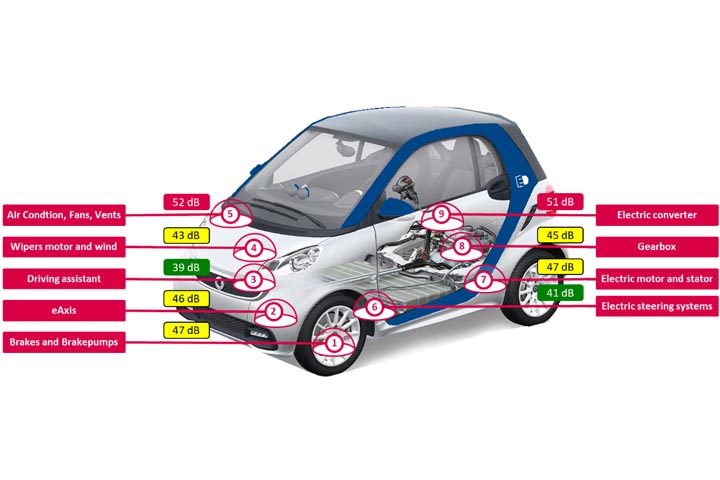
Modern NVH measurement involves the use of a multi-channel data acquisition system equipped with a sound level meter function. This technology aids in the identification of specific noise sources within the vehicle, such as engine noise, wind noise, tire noise, and other external sources, contributing to comprehensive noise analysis in cars.
 

Interior Noise

Interior Noise

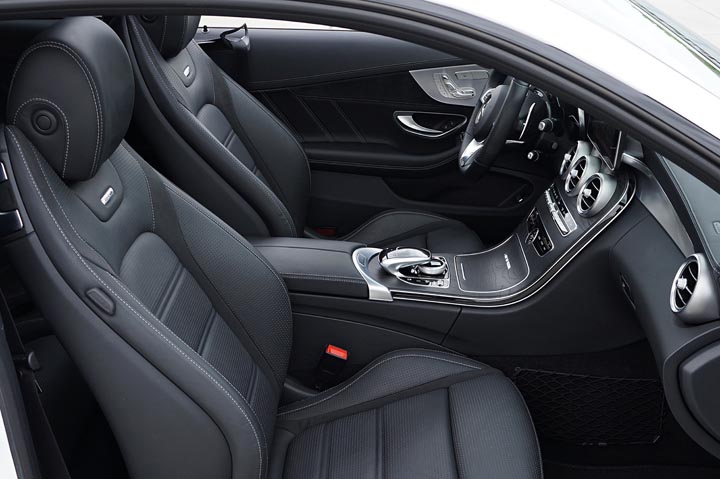
Measuring interior noise in a vehicle is an important aspect of NVH (Noise, Vibration and Harshness) analysis as it has a direct impact on the quality and comfort of the driving experience.


> Read More

Pass-by Noise Measurement

Pass-by Noise

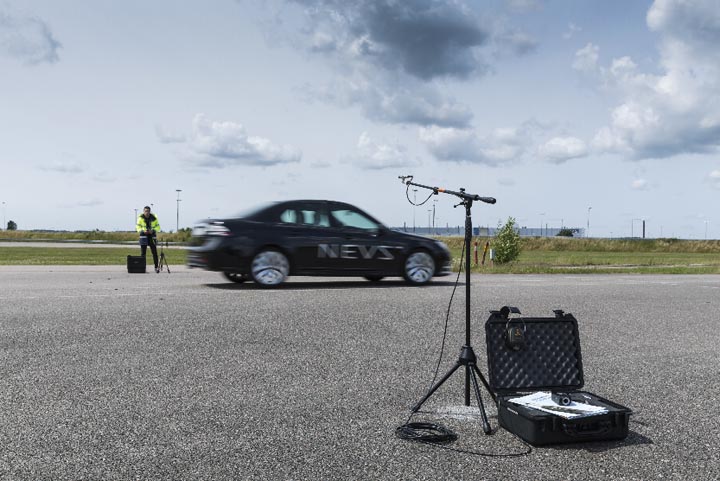
Vehicle pass-by measurements record the sound level and acoustic characteristics of a vehicle as it passes a certain point.


> Read More

Sound Power

Sound Power

Sound power is the sound energy that a component or machine emits in all directions. It is independent of distance and cannot be measured with a simple sound level meter.


> Read More

Subjective Evaluation:

Alongside quantitative measurements, subjective assessments from test drivers and passengers play a pivotal role in evaluating the overall comfort of the vehicle. Their feedback assists engineers in understanding human perception of NVH and guides them in implementing essential improvements, central to the process of automotive noise and vibration analysis.


Road Tests:

Conducting real-world driving tests provides valuable insights into how a vehicle performs across diverse environments. Road tests are instrumental in evaluating the comprehensive NVH characteristics of the vehicle, allowing for the identification of potential issues that may not be apparent during laboratory testing. While lab testing and simulation are important steps, the actual road testing is crucial to the comprehensive analysis of NVH in automotive vehicles.


Overall, the accurate measurement and analysis of NVH are fundamental components of vehicle design and development, ensuring the delivery of high-quality, comfortable vehicles that meet the expectations of discerning consumers. Employing effective NVH testing methodologies enables automakers to bring superior, comfortable vehicles to the market, in line with the core principles of noise and vibration control in the automotive industry.


Vibrations in the Automotive Industry

Vibrations in the automotive sector are a critical factor that affects both driving comfort and safety. They can be caused by bumps in the road or by the vehicle itself. Vibrations can lead to fatigue and loss of concentration and affect driving safety.

The vibration characteristics of a vehicle have a considerable influence on the subjective perception of driving comfort. However, these vibration characteristics are not only crucial for comfort, but also for the health of the occupants. Occupants can experience health problems, e.g. back pain, due to considerable vibration amplitudes and prolonged exposure if insufficient design and testing has been done for vibration comfort.

Primary sources of vibration in automobiles


Engine and Powertrain Vibrations:

The imbalance of the engine and drivetrain, the ignition of the cylinders in a combustion engine and the magnetic characteristics of the electric motor can lead to significant vibrations throughout the vehicle.

Measuring and analyzing these vibrations is often a complex task that requires both specialized analysis tools and knowledge of how to interpret the results. Here are some of the common methods for measurement and analysis:

Speed sensors are used to measure the rotational speed of the motor and other moving parts in the drivetrain. This data allows conclusions to be drawn about how the vibrations change with speed. The vibrations themselves are usually measured using acceleration sensors, which are attached to various points on the engine and drivetrain and provide information on the amplitude and frequency of the vibrations. The recorded signals are analyzed online as frequency spectrum or order spectrum over the speed and visualized. In this way, engineers and mechanics can determine the causes of vibrations and localize potential problem areas.

Chassis Vibrations:

Bumps in the road cause vibrations that are absorbed by the wheels and chassis. The quality of the dampers, springs and chassis structure determines how these vibrations are absorbed and damped. The measurement and analysis of chassis vibrations is essential for assessing ride comfort, handling and the overall dynamic behavior of a vehicle.

Triaxial accelerometers are commonly used sensors for measuring chassis vibrations. These sensors detect accelerations and can be mounted at various points on the chassis. Often the interest of the vibrations is in the frequency and amplitude, which is calculated using the averaged FFT spectrum. The frequency spectrum provides information about the dominant frequencies of the vibrations, which can be correlated with specific vehicle components or road conditions.

Measurement of the Road Profile:

How do vibrations affect the human body? The vibration level in vehicles is measured in accordance with ISO 2631. This standard provides information on the load of the vibration on the human body as whole-body vibrations.


Wheel force sensors can be used to determine the dynamic forces introduced into the vehicle by the road surface.

> Learn More about Wheel Force Sensors


Aerodynamic Vibrations:

Aerodynamic vibrations are caused by the interaction between aeroelastic forces and the structural dynamic properties of a vehicle or a vehicle component. These can be, for example, vehicle wing mirrors, spoilers or the roof, which are stimulated to vibrate by the air flow. These turbulent flows are pressure fluctuations in the air and are measured using sound pressure microphones. Care must be taken to ensure that the microphones do not influence or even distort the vibrations. Ultra-Thin-Precision (UTP) microphones or surface microphones from GRAS are ideal for such measurements as they can be strategically placed on the vehicle and are easy to use.

The GRAS 48LX-1 UTP microphone has a height of only 1 mm and these microphones are also available in 4 channels (GRAS 48LX-4) and 8 channels UTP line array (GRAS 48LX-8) for measurements in boundary layers and turbulence.

> Learn More about GRAS UTP Microphones


Data Acquisition Systems Measurement Software Sensor Solutions Telemetry Test Stands
FAMOS imc STUDIO imc WAVE imc LINK
Industries General Applications Automotive Applications
Knowledge Center imc Academy App Notes Whitepapers Tradeshows & Events Webinars Measurement Software News Press Export Declaration
Customer Service System Service Contact Sales General Contact Become a Partner Locations
About imc About Axiometrix Solutions Company Profile CAEMAX KMT Careers Quality Assurance Terms & Conditions Grounding Page
Axiometrix Solutions Logo negativ
imc Test & Measurement is part of Axiometrix Solutions, a leading test solutions provider comprised of globally recognized measurement brands. Productive testing is essential for the success of our customers—hence, our driving force. Since 1988 we have been committed to support industrial innovations with optimal measurement solutions. We are manufacturing our productive test and measurement systems at our headquarters in Berlin, Germany, operating worldwide in Europe, the US and Asia.

© imc Test & Measurement GmbH. All rights reserved.

Privacy Policy REPORT AN INCIDENT
Follow Us:
↑
Loading